Showing posts with label Recipes. Show all posts

Thursday, May 9, 2013

Friday Feature: 101 Uses for Leftover Wine - Make a Syrup!

OK. I know what you're thinking:  Why does this woman have so much leftover wine?

The answer is simple. I teach wine classes at a culinary school. By law (and as a matter of good judgement) we do small tasting pours. If we didn't, students would either snore through the rest of their classes, or weave a bit when serving the guests in our restaurant dining room at lunch or dinner. Not a good thing. 

So I often have  between 1/4 cup and one cup of leftovers from each of 4-6 wines.
I can't drink them all (since too much wine in the evening for me means interrupted sleep) and I hate to waste something that so many people worked so hard to produce.. 

Ergo: 101 Used for Leftover Wine


Wine Syrup

Try wine syrup over pancakes or waffles, over ice cream, over fruit, in a parfait with greek yogurt , or drizzle a bit over a piece of hard cheese.  Delicious!


To make the syrup,  wine, sugar and flavorings are simmered until the liquid  reduces and thickens; so to make it worthwhile (i.e. to get enough yield to give as a gift or serve a crowd), I save up bits and schnitzels of leftover wine by freezing whites and reds separately in  ice cube trays or in disposable plastic containers with snap on lids. I tend to favor fruity rather than oakey whites, but if you like both, I suggest making separate batches and see how the oak impacts the syrup flavor.  When enough of each type of leftover accumulates, I make a batch of syrup.


To Make 1 cup of White Wine Syrup


3 1/2 cups leftover white wine
1 cup sugar
optional flavorings:
1 vanilla bean
zest of one  well washed lemon

Combine the wine and sugar in a saucepan.
If you are using the zest, add it here.
If you are using the vanilla, split the bean and scrape out the seeds. Add both pod and seeds to the pan.

Bring the pan to a boil, reduce the heat, and simmer the liquid until it is reduced to 1 cup.
Remove the vanilla pod or strain out the zest if flavorings were used.
Allow the syrup to cool , and place in a clean, decorative jar.
Store in the refrigerator. It will thicken when it cools.


T


To Make 1 cup of  Red Wine Syrup


3 1/2 cups leftover red wine
1 cup sugar
1 cinnamon stick

optional flavorings (in any combination or none at all):

1 vanilla bean, split
2 strips of orange zest (white pith removed)
2-4  whole cloves
2 whole star anise
1 teaspoon black peppercorns

Combine the wine, sugar, cinnamon, and any additional optional flavorings in a saucepan. Bring it to a boil, reduce the heat, and simmer until the liquid is reduced to 1 cup. Remove the cinnamon stick and strain any of the optional flavorings. Allow to cool, and place in a clean, decorative jar.  Store in the refrigerator.

These syrups will last indefinitely as long as they are refrigerated, but mine never last for long.

And if you don't have leftover wine? Buy a bottle of inexpensive red or white and try the recipe out. You won't be disappointed!


Friday, May 3, 2013

Friday Feature: 101 Uses for Leftover Wine: Make a Pan Sauce

A pan sauce made with wine is an easy way to make any sauteed protein into something special.


It's a way of combining the fond- those tasty brown bits left on the bottom of the pan when you cook protein at high temperature, with wine and other flavors to create a savory sauce that is served with the protein.

Fond

The process is pretty simple, and lends itself to countless variations.


Once your protein is cooked, remove it to a plate and tent it with aluminum foil. Allow it to rest while you are making your sauce. The resting period will allow the natural juices to be reabsorbed back in to the protein.


Remove all but about 2 tablespoons of fat from the saute pan, and add 1 shallot, finely minced.  Saute the shallot over medium heat until the it is softened.(2-3 minutes) Do not brown.

Add  1 cup of stock (beef, chicken or mushroom) depending on the flavor that will work best with your protein,  and 1/2 to 3/4 cup of red or white wine (again, depending on your protein) , scraping up and dissolving those lovely bits of fond at the bottom of the pan. At this point you have several options: if you want a slightly sweeter sauce, add a teaspoon of brown sugar. If you would like something a bit more savory, add a teaspoon of tomato paste. For something a bit mor piquant, add a teaspoon or two of coarse mustard (good with chicken and pork) or lemon juice (delicious with fish). You might also add a teaspoon of minced fresh herbs. Or, add nothing at all.  


Simmer until the sauce is slightly thickened. To make the sauce rich and glossy, wisk in 3 tablespoons of chilled butter, one tablespoon at a time, waiting until each piece is fully incorporated before adding the next.

Do Not Boil.
The butter will bind the sauce into an emulsion which can break with excess heat.

Take the pan off the heat, add salt and pepper to taste, and you have an elegant and delicious sauce to serve with your steak, chop, chicken breast, fish fillet, or whatever you have prepared.  Enjoy!

Thursday, April 25, 2013

A Glass of Deliciousness: Brooks Sweet P 2008 Willamette Valley Riesling

I truly love a good Riesling.   My first introduction to the grape here in Oregon was through pioneer vintners Bill and Virginia Fuller, then owners of Tualatin Vineyards near Forest Grove. In the late 1980's, Bill and Virginia  hired my catering company to develop and serve  hors d'oeuvre menus in celebration of the release of each year's vintage- and along with delicious Chardonnays and Pinot Noirs, the pair produced delightful Rieslings.

As much as I enjoyed them, I always believed that the terroir and climate here in the Willamette Valley would produce good Rieslings  but very different from the glorious Spatlese (late harvest) Rieslings produced from grapes grown on the steep south facing slopes of Germany's Mosel River.


Germany is about as far north as Vinifera wine grapes can grow. The cold winters insure dormancy, which the vine needs to thrive. The grapes can ripen here despite the cold climate and short season because of two factors: steep south facing slopes along the river (facing south means sun from early morning until late afternoon, and the steepness of the slopes right along  the river mean  that the vineyards benefit from additional sunlight bouncing off the water), and the dark slate soil which absorbs heat during the day and radiates it back at night.

Last evening I was introduced to Brooks Sweet P 2008 Willamette Valley Riesling; and had I tasted it blind, I would have identified it as German; not from the New World, and certainly not from Oregon.


The wine is gold, with must a hint of terpines on the nose (terpines are naturally occuring hydrocarbons that develop as Riesling takes on age), along with peach, nectarine, yellow delicious apple, white flower and honey . The nectarine and apple come through on the medium sweet palate as well. There is plenty of acidity to balance the residual sugar, and the wine coats the mouth to a long finish that transitions from stone fruit to a hint of tangerine. Soooooo good.

We tasted it with grilled bratwurst from Sheridan Fruit (they make fantastic sausages in house) on a bed of caramelized onion and served with mustard and my own zucchini relish. The relish is God's gift to sausages, and was the perfect foil for the flavors and residual sugar in the wine.

It's also the perfect solution to the baseball bat sized zucchini that hide under the leaves and are otherwise only fit for zucchini bread. Here is the recipe- try it and I guarantee you will never want to eat store-bought relish again.


Zucchini Relish

4 pounds zucchinni
2 pounds yellow onion
5 tablespoons kosher salt
2 1/4 cups cider vinegar
6 cups granulated sugar
1 tablespoon nutmeg
1 tablespoon tumeric
2 tablespoons cornstarch

2 tablespoons cerery seed
1/2 teaspoon black pepper

Grind the zucchini and the onions, add the salt, and let stand overnight in a colander
Rinse in cold water, and let drain thoroughly.
Place in a stock pot with the remaining ingredients and cook for 40 minutes.The relish should thicken and  the liquid should appear glossy.
Pour into sterilized jars with 1/2" headspace and seal.
Process 10 min in a boiling water bath.

Makes 13 pints


Wednesday, April 24, 2013

Friday Feature preview:- 101 uses for leftover wine

A while ago, I polled several wine friends on their favorite uses for leftover wine. The silence was deafening, the looks were puzzled, and the inevitable response was, "What leftover wine?"

Now, I know that I can't be the only person who likes a glass of wine in the evening with dinner or while cooking,,,,,and since I only drink 1 or 2 glasses, I sometimes don't  finish the bottle before it loses its freshness.

 Life is too short to drink wine that is past its prime; but fortunately, there are lots of delicious ways to use the wine even after its best days are over.

Looking for ways to utilize leftover wine will be our regular Friday feature. 

I will suggest recipes and techniques to make those little bits and schnitzles into something really tasty.

Will I get all the way to 101 uses? Check in every Friday and find out!

Uses for leftover wine #1

Use it in a marinade. 

Marinades both flavor and tenderize proteins.  They usually consist of an acidic ingredient such as wine, vinegar, citrus juice, or verjus (which does the tenderizing), oil, and herbs or spices. Plan on 1/2 cup of marinade per pound of meat, fish or poultry. These marinades will keep in the refrigerator for about a week.

Mix the ingredients in a ziplock bag or non-reactive container.
Add the meat, refrigerate  2-4 hours, turning occasionally. Larger cuts can be marinated overnight. Delicate fish can be ready in as little as 30 minutes. 
Remove the marinade before cooking. If you want the product to brown, pat it dry first to prevent a moisture barrier which will cause the food to steam rather than brown. If you want to baste the cooking meat or fish with the marinade, bring the marinade to a boil first to destroy any bacteria from its contact with raw product. 

Red Wine Marinade for Lamb or Beef


1 cup hearty red wine
3/4 cup olive oil
2 cloves garlic, peeled and crushed
1 stem or 2-3 smaller sprigs of fresh rosemary
juice of 1/2 lemon
1 teaspoon sea salt
1.2 teaspoon whole black peppercorns


White Wine Marinade for Chicken or Fish

1/2 cup fruity white wine
1/2 cup olive oil
zest and juice of 1 lime
2 tablespoon honey
1 tablespoon thyme
1/2 tsp kosher salt

White Wine Marinade for Pork or Chicken

1 cup white wine
1/3 cup olive oil
3 tablespoons orange juice concentrate
1 tablespoon orange zest
2 tablespoons minced shallot
3 tablespoons dried herbs (oregano or thyme work well)
3 cloves garlic, minced
3/4 teaspoons kosher salt
1/4 teaspoon ground pepper


Have fun with your marinades. Be creative. Use these as starting points and build your own signature recipes (and don't forget to have a nice glass of wine with the finished product!)

Monday, April 22, 2013

A Dinner Menu to Pair with Manhattans ?

I love food, cooking,wine and spirits (preferably brown); but as an empty-nester and someone who has to constantly battle with weight, I tend to eat pretty much the same things over and over. It's a real bummer, but boredom does result in fewer calories. I get to indulge in both cooking and eating when  I prepare a dinner to pair with a wine region or varietal that we are studying; or when there is a special occasion.

Today is one of those special occasions: my baby boy is coming over for dinner to celebrate his 40th birthday. So, since we are both bourbon lovers, I decided to make the Manhattan the flavor theme for the dinner.

Manhattans were on my mind, since on April 7, my  company Taste and Compare Academy of Wine,Spirits and Food, presented a workshop on the Manhattan. Spirits expert Hoke Harden and master bartender Nathan Gerdes did a fantastic job showing how to combine different whiskeys and different vermouths to create variations on this classic cocktail.
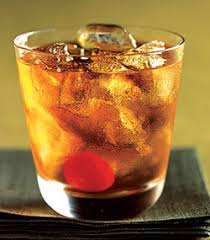
.

Contrary to popular belief, spirits can be paired throughout the meal, and the menu I have chosen is Manhattan friendly throughout.  Here is the menu, Manhattan included :

Classic Manhattan with Old Forester "Signature" Bourbon, paired with Carpano Antica Vermouth and Angostora Bitters.

According to the information provided by Hoke and Nathan, "Old Forester Signature 100 Proof Kentucky Straight Bourbon is one of the most iconic and traditional of bourbons. It  hearkens back to the traditional 1800s style of bourbon, and was the first bourbon to be marketed in labeled, sealed and signed bottles for authenticity. This is a “rye heavy” bourbon at a full 100 Proof, so it has a strong, sweet-corn entry with tangy, spicy, leathery and pepper notes enhanced by the increased level of alcohol. It finishes with surprising length and delicacy for a 100 Proof whiskey, with little burn and a lingering warmth to signal its passage."

The Carpano Antica is " rich,viscous, and plump in flavor, with a prominent expression of vanilla roundness which enhances the vanilla and caramel of the whiskey".   Yum.

The traditional blend is 2 oz whiskey to 1/2 oz of vermouth, 1-2 dashes of bitters (Angostura is the most frequently used) stirred with ice, served on the rocks, or strained into a manhattan glass and served straight up. Traditional garnishes include a maraschino cherry and/or a twist of citrus.  I was given a jar of kirsch marinated wild cherries for Christmas, and I think that is what I will use tonight.


 Spinach, Bacon, Toasted Pecan and Goat Cheese Salad with Hot Bacon Dressing. 

You will need:


1/4 pound bacon diced
1/3 cup toasted  chopped pecans
2 tablespoons olive oil
1 tablespoon cider vinegar
5 ounces baby spinach
1 ounce goat cheese
Kosher or sea salt and freshly ground black pepper to taste

Cook the bacon in a skillet until crisp. Remove to paper towels, keep about 1 1/2 tablespoons of the bacon fat and discard the rest.
When you are ready to serve the salad, heat the bacon fat in the skillet until hot, whisk in the vinegar and olive oil until emulsified, and season to taste with salt and pepper.
Toss the spinach with the pecans, goat cheese, and warm bacon dressing. Serve immediately.


Since we are  following our Manhattan theme, I decided on  a quick and easy Paula Dean recipe:

 Bourbon  Glazed Pork Chops served with Pommes Dauphinoise and Oven Roasted Aspragus


2 tablespoons Dijon mustard
1 teaspoon packed dark brown sugar
1 tablespoon bourbon
2 center cut bone in pork chops (about 1 pound)
1 clove garlic, minced
kosher or sea salt and freshly ground black pepper

Mix the mustard, brown sugar and bourbon.
Salt and pepper the chops and rub with the minced garlic.
Brush with half of the glaze.
Grill the chops over medium heat to 145 degrees internal temperature (about 10 min per side for 1 1/2 inch chops)
Remove from the grill, brush with the remaining glaze, and allow 3-5 min resting time before serving.

I'm serving the chops with Pommes Dauphinoise and Oven Roasted Asparagus. The potatoes can be prepped and pre-cooked in advance, and finished in the oven along with the asparagus while the chops are on the grill- and miraculously, if all goes as planned, will finish at the same time. All can stay in a warm oven while you are eating the salad, and come to the table together.

Pommes Dauphinoise


1 pound Yukon Gold potatoes
1 clove of garlic, crushed or thinly sliced
5 oz cream
5 oz whole milk
1 sprig fresh thyme
1 small bay leaf
3 ounces gruyere, grated
kosher or sea salt and freshly ground black pepper

Peel the potatoes and thinly slice using a mandolin. Do NOT rinse! (you want the starch to help thicken the sauce)
In a saucepan large enough to hold the milk, cream and potatoes, heat the liquids with the garlic, thyme, bay leaf, salt and pepper to taste and simmer for 2 minutes.
Slide in the potatoes gently and simmer until the potatoes are soft but not falling apart.
Strain in a colander, gently, reserving the cream. Remove the thyme and bay leaf.
Butter a gratin pan.
Add half of the potatoes, 2/3 of the cheese, and the second half of the potatoes.
Top with the remaining cheese, and pour in the milk mixture (check for salt and pepper and add more if needed) just to the top of the potatoes.
At this point you can cover and refrigerate until needed.
To finish, place the gratin in a 400 degree oven for 15 min. The gratin should be nicely browned and bubbly.  Allow to sit 10 min before serving


Oven Roasted Asparagus


Snap the tough ends off of the asparagus stalks and peel the bottom half  if thick.
Toss with olive oil, 2 cloves of garlic, minced, and 2 tbs of minced shallots per pound of asparagus.
Place on a baking sheet or pan large enough for the asparagus to sit in one layer
Roast in a 400 degree oven until tender and lightly browned.
Sprinkle with salt and a bit of lemon before serving. Optional: garnish with shaved parmesan.
I always make extra. Leftovers are lovely.

Dessert? Bourbon baked apples.

Core and peel the top 1/3 of  2-3 tart baking apples and put them in a pan (a bread loaf pan works well)
Stuff with brown sugar and butter
Pour 1 cup of apple cider and 1/3 cup of bourbon into the pan
Bake until tender, basting with the sauce.
Serve warm .


If you would like to see the  tasting notes for all of the whiskeys and vermouths and how they combined into different versions of the Manhattan, click  here.


Thursday, April 18, 2013

Verjus?


Yup- Verjus. Green Juice. The juice of unripe grapes: bright, non-alcoholic, not as acidic as vinegar;  low in sugar; fresh and fruity; and a "secret ingredient" that makes otherwise "difficult-to-pair-with wine"  food more wine friendly.

It's a classic alternative to vinegar

 used in marinades, salad dressings, pan sauces, and mustards; and comes in red (from red or a combination of red and white grapes, either fruity and soft, or bigger  with earthy notes), and white (pictured here), which tends to be  lighter and crisper.

Here in Oregon, Abacela Winery in the Umpqua Valley, and Montinore Vineyards in the Willamette Valley produce beautiful versions from fruit that is "green harvested", pruned while still unripe to decrease overall yield and improve ripening, sugar levels, and fruit concentration of the remaining clusters.  If not made into Verjus, the green harvested fruit is dropped and left in the vineyard as compost.

Here are some recipes to try:

Mix one part of Verjus with 2 parts of sparkling water for a refreshing spritzer.                                            

Try it in place of vinegar in a salad dressing, with 3 parts verjus to 1 part oil.  Salads with vinaigrette are notoriously hard to pair with wine. Verjus is  tart, but produces a softer but still flavorful dressing that pairs well with a fruity white wine. It works with wine because the acids in verjus are grape acids rather than the more pungent acetic acid found in vinegars.

The next time you poach chicken or salmon, try replacing some of the poaching liquid with verjus for a nice kick of flavor. Chicken breast poached this way makes a particularly delicious chicken salad.

Verjus can  be used in place of wine to deglaze a pan, or in place of of vinegar or lemon juice in sauces.

Try it in a Buerre Blanc.

You will need:
1 tablespoon finely chopped shallot
1 cup dry white wine
1/2 cup verjus
1 pound cold unsalted butter, quartered and and cut into 1/2" pieces
kosher salt to taste

Combine the  chopped shallot, wine and verjus in a non-reactive saucepan. Bring to a boil, reduce the heat, and simmer until about 2 tablespoons remain.
Reduce the heat to low, and add the butter 2 pieces at a time, wisking as the butter melts and the sauce emulsifies. When you are ready to add the last two pieces of butter, take the pan off of the heat, wisk in the last of the butter, season to taste with salt, and serve immediatly over fish or seafood.  Makes about 2 cups of sauce.
And as Julia would say, "Bon Appetit".